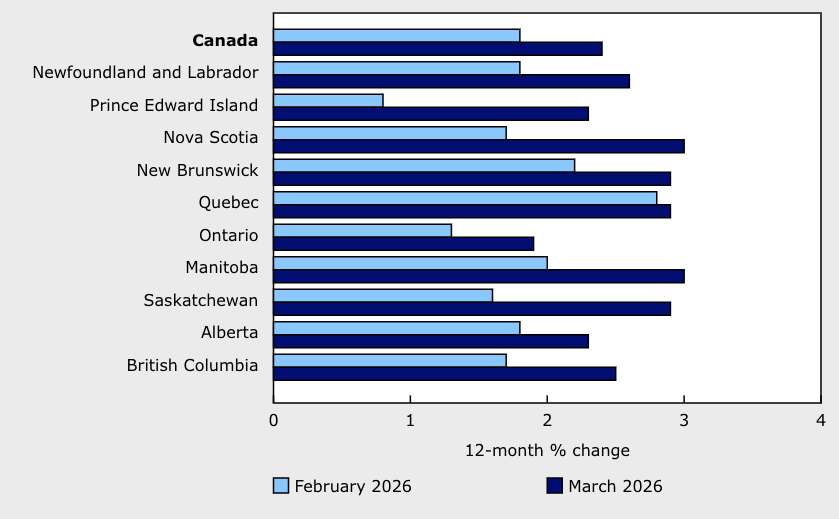
Canada’s annual inflation rate climbed to 2.4 per cent in March, driven largely by a sharp increase in fuel prices, Statistics Canada said Monday.
That marks a notable jump from 1.8 per cent in February, as higher energy costs pushed overall prices upward.
In British Columbia, inflation rose to 2.5 per cent in March, up from 1.7 per cent the previous month.
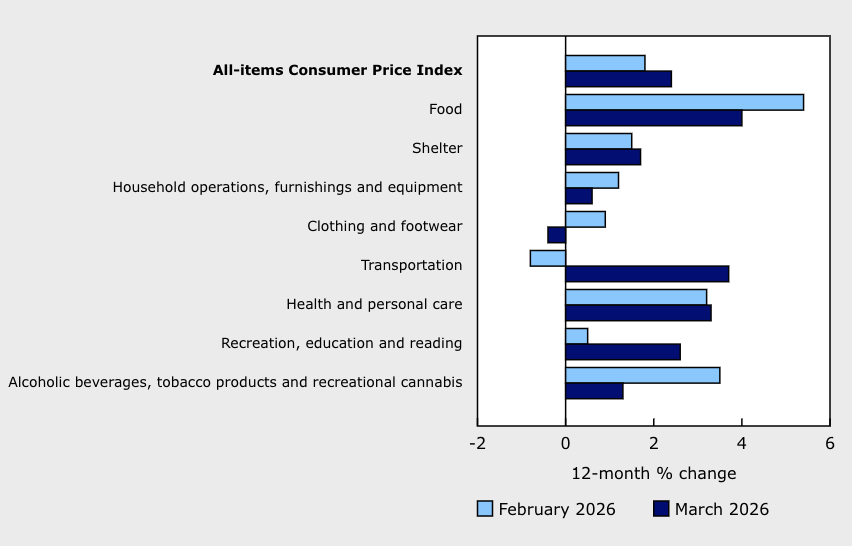
StatCan said the acceleration in headline inflation was led by energy prices, particularly gasoline. Prices at the pump rose 21.2 per cent month over month — the largest increase on record — as supply disruptions tied to conflict in the Middle East sent global oil prices higher.
On a year-over-year basis, gasoline prices were up 5.9 per cent in March.
Excluding gasoline, inflation slowed to 2.2 per cent, down from 2.4 per cent in February, suggesting underlying price pressures were more muted.
Energy prices overall rose 3.9 per cent annually in March after falling 9.3 per cent the previous month, with fuel oil and other fuels up 26.1 per cent.
Food prices also continued to rise, with grocery costs increasing 4.4 per cent year over year. Fresh vegetable prices jumped 7.8 per cent, which StatCan attributed to poor growing conditions affecting items such as cucumbers, peppers and celery.
At the same time, base-year effects linked to the end of a federal GST/HST break helped temper the overall inflation rate.
The tax holiday, which ran from December 2024 to February 2025, continued to put downward pressure on annual comparisons in March.
Prices rose 0.9 per cent on a monthly basis in March, or 0.5 per cent on a seasonally adjusted basis.
The March data comes ahead of the Bank of Canada’s next interest rate decision on April 29, with policymakers expected to weigh the recent spike in energy prices against broader inflation trends.