Canada’s unemployment rate rose to 6.9 per cent in April as more people searched for work and full-time employment fell, Statistics Canada said Friday.
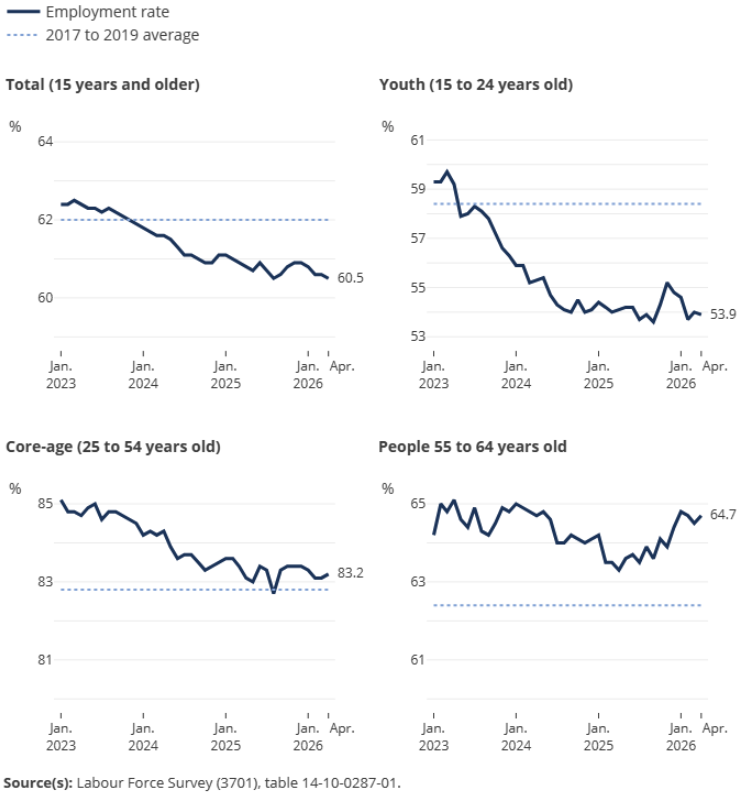
The agency said there was a net loss of 18,000 jobs and the employment rate fell to 60.5 per cent, matching a recent low reached in August 2025.
The April figures point to continued softness in the labour market after a weak start to the year. Employment has fallen by 112,000 positions over the first four months of 2026, with those losses concentrated in full-time work.
Full-time employment fell by 47,000 in April, while part-time work rose by 29,000. Since January, full-time employment is down by 111,000 positions.
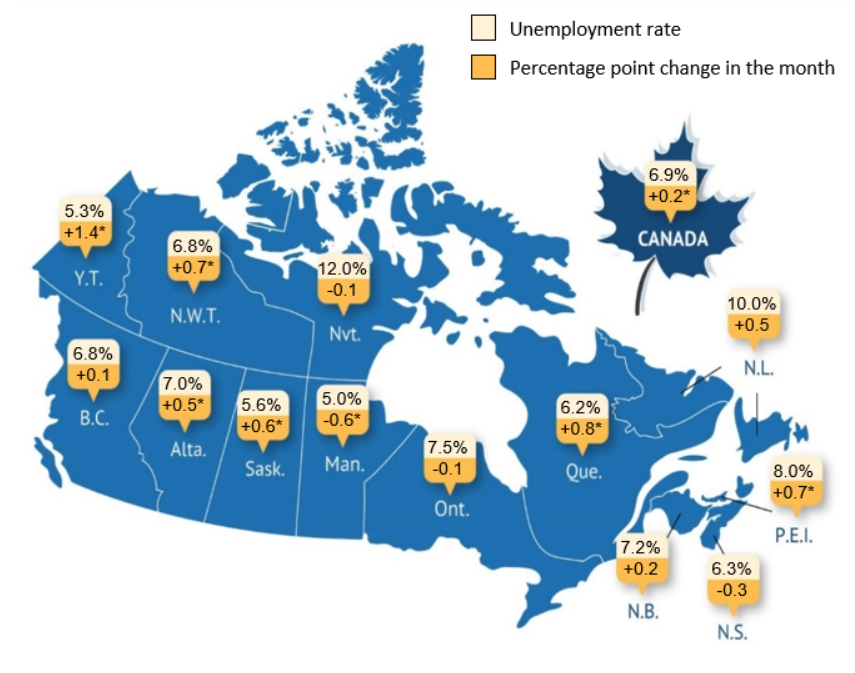
British Columbia did not see a significant monthly change in employment, according to Statistics Canada, after back-to-back losses in February and March pushed the province’s unemployment rate to 6.7 per cent last month. Across BC's urban areas, the following rates were recorded:
- Kelowna: 8.0 per cent in April (7.0 per cent in March)
- Kamloops: 4.9 per cent in April (4.1 per cent in March)
- Chilliwack: 7.2 per cent in April (6.0 per cent in March)
- Abbotsford-Mission: 6.5 per cent in April (5.7 per cent in March)
- Vancouver: 6.5 per cent in April (6.2 per cent in March)
- Victoria: 4.3 per cent in April (4.6 per cent in March)
- Nanaimo: 8.7 per cent in April (7.9 per cent in March)
The agency said April’s job losses were concentrated in Quebec, Newfoundland and Labrador, Saskatchewan and New Brunswick, while Ontario posted gains.
Quebec saw the largest monthly decline, losing 43,000 jobs in April. The province’s unemployment rate rose 0.8 percentage points to 6.2 per cent, matching a recent peak from June 2025. Statistics Canada said job losses in Quebec since January have been concentrated in the Montreal area.
Ontario added 42,000 jobs in April, partially offsetting a sharp decline recorded in January. The province’s unemployment rate edged down to 7.5 per cent.
Nationally, the unemployment rate rose 0.2 percentage points from March as 51,000 more people looked for work. The participation rate, which measures the share of people aged 15 and older who are working or looking for work, rose to 65.0 per cent.
Youth unemployment climbed again, rising half a percentage point to 14.3 per cent. The rate remains well above the pre-pandemic average of 10.8 per cent.
Among workers aged 25 to 54, employment was little changed, but the unemployment rate for men in that age group rose to 6.1 per cent as more searched for work. The rate for core-aged women was virtually unchanged at 5.9 per cent.
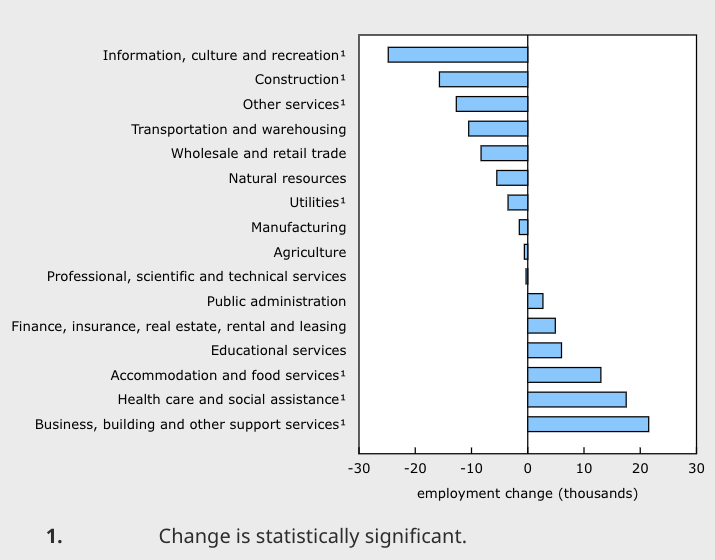
The goods and services picture was mixed.
Employment fell by 25,000 in information, culture and recreation, by 16,000 in construction and by 13,000 in “other services,” a category that includes repair, maintenance and personal services.
Those losses were partly offset by gains of 22,000 jobs in business, building and other support services, 18,000 in health care and social assistance, and 13,000 in accommodation and food services.
Health care and social assistance remains the clear bright spot over the past year, with employment up 119,000, or 4.1 per cent, compared with April 2025.
Wage growth remained elevated but eased from March. Average hourly wages rose 4.5 per cent year over year to $37.77, following a 4.7 per cent increase the previous month.
Statistics Canada said the recent strength in wage growth partly reflects changes in the composition of employment. Holding occupation and job tenure constant, wages were up 3.4 per cent year over year in April, similar to recent months.
The report comes as the Bank of Canada weighs a soft labour market against inflation pressures from higher energy prices and global uncertainty. In its most recent Monetary Policy Report, the central bank said indicators such as employment, hours worked and job vacancies suggest slack remains in the labour market, even as layoffs have stayed modest.
Thumbnail photo credit: City of Kelowna