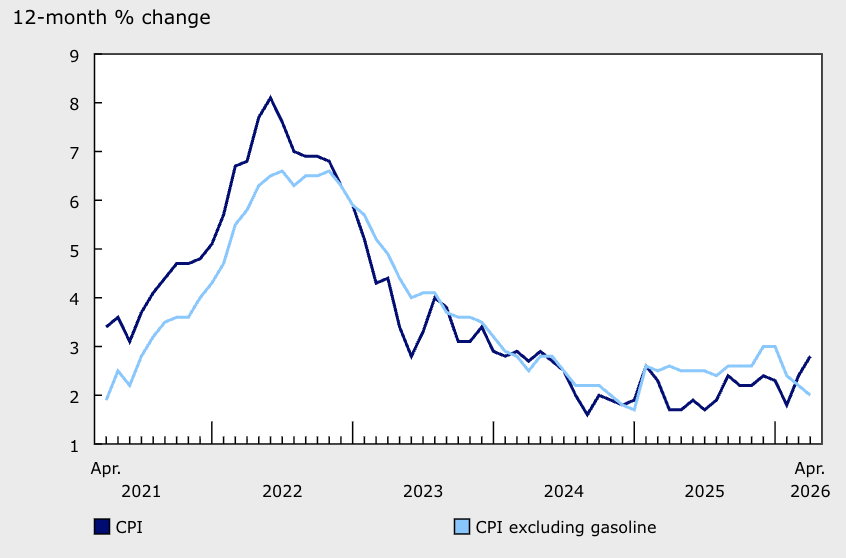
Canada’s annual inflation rate rose to 2.8 per cent in April as higher energy prices, especially gasoline, pushed overall price growth higher, Statistics Canada said Tuesday.
The increase follows a 2.4 per cent inflation rate in March and marks a second straight month in which fuel costs were the main driver of headline inflation.
Statistics Canada said energy prices rose 19.2 per cent year over year in April, up sharply from a 3.9 per cent increase in March. Gasoline prices rose 28.6 per cent from a year earlier, after increasing 5.9 per cent in March.
The agency said gasoline prices were pushed higher by supply uncertainty linked to the conflict in the Middle East, as well as the seasonal switch to more expensive summer-blend gasoline. The increase was moderated by the temporary suspension of the federal fuel excise tax, which took effect April 20.
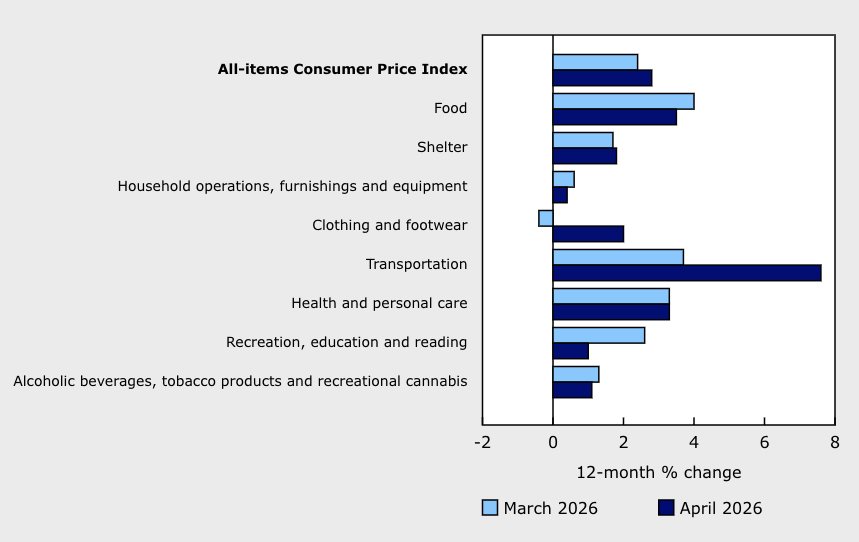
The removal of the consumer carbon levy in April 2025 also affected the annual comparison. Statistics Canada said the levy’s removal caused gasoline and natural gas prices to fall a year ago, and that decline has now dropped out of the 12-month calculation, putting upward pressure on inflation.
Excluding gasoline, the consumer price index rose two per cent year over year in April, down from 2.2 per cent in March, suggesting price pressures outside the pump were easing.
In British Columbia, inflation held steady at 2.5 per cent in April, the same rate as March. It was the only province where price growth did not accelerate.
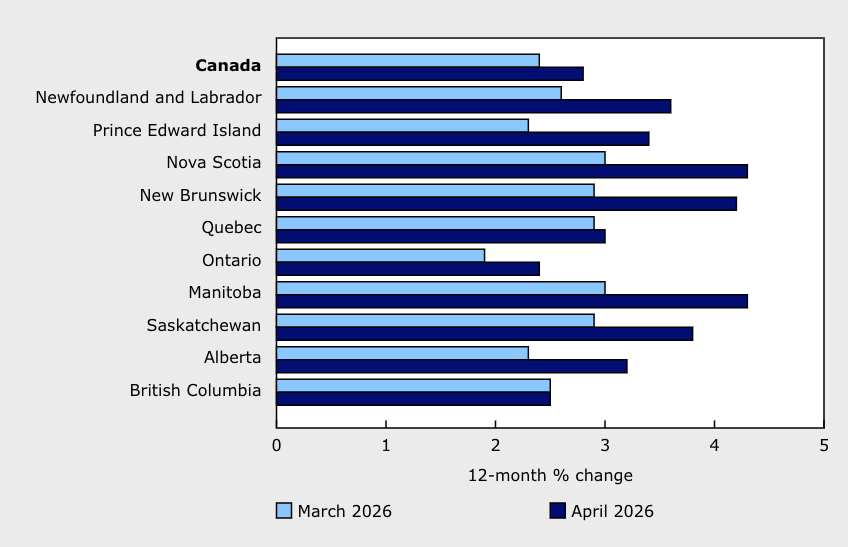
Statistics Canada said rent growth slowed most sharply in B.C., rising 3.4 per cent year over year in April compared with 6.4 per cent in March. The agency noted B.C.’s population has declined for four consecutive quarters.
Nationally, rent prices rose 3.6 per cent year over year in April, down from 4.2 per cent in March. Despite that slowdown, rents have climbed 30.8 per cent since April 2021.
Fuel oil and other fuels rose 41.3 per cent year over year in April, also linked to higher oil prices tied to the Middle East conflict. Natural gas prices were down 2.4 per cent, a much smaller decline than the 18.1 per cent drop recorded in March.
Clothing and footwear prices also added upward pressure, rising two per cent year over year after falling 0.4 per cent in March. Statistics Canada said the increase was led by higher prices for clothing, including women’s clothing.
Some categories helped offset the faster headline increase. Prices for travel tours fell 11 per cent year over year after rising 11.5 per cent in March, reflecting the typical seasonal drop after stronger demand in February and March.
On a monthly basis, prices rose 0.4 per cent in April. Seasonally adjusted, the CPI was up 0.3 per cent.
The April report comes as the Bank of Canada weighs the effect of higher energy prices against signs that underlying inflation remains closer to target. The central bank has said it is watching whether the oil-driven price shock spreads more broadly through the economy.