Finding a baby bird alone can be alarming, but it’s not always a cause for concern.
Each year, wildlife rehabilitation centres treat hundreds of young birds that are believed to be orphans, but are actually healthy and still in their parents’ care. In most cases, the bird should be left alone and trying to help can actually cause more harm.
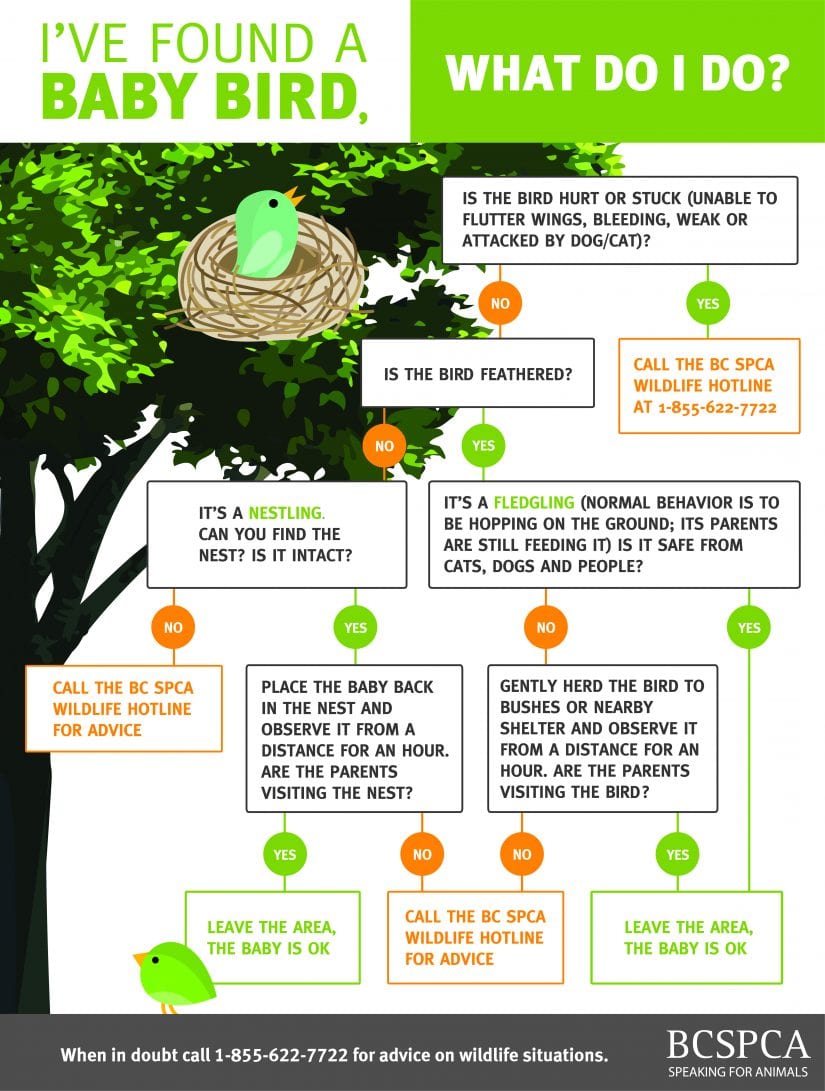
If a baby bird is found alone, it’s important to understand whether it’s a hatchling, nestling or fledgling. This will determine the best course of action for its survival.
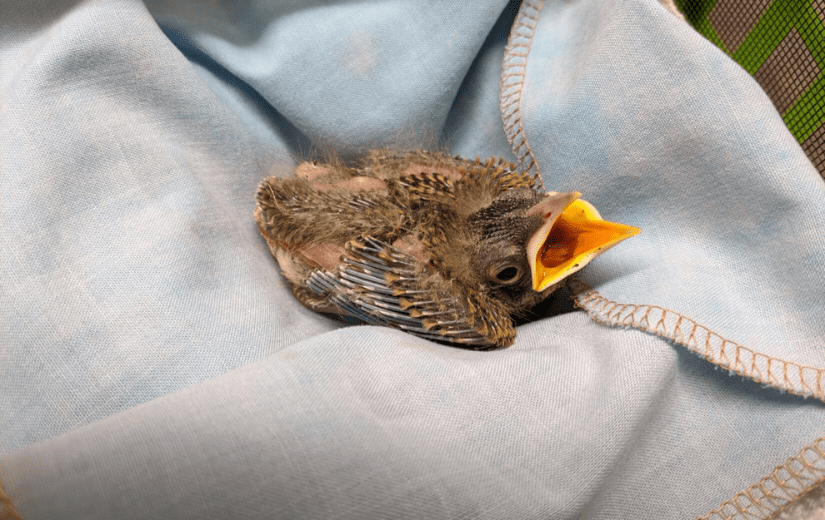
Hatchlings and nestlings are very young, featherless or incompletely feathered birds and should not be outside their nest. If you find a healthy hatchling or nestling on the ground:
- Look around for their nest to return them to – be sure it’s the right nest and other babies look exactly the same (Note: it’s a myth that parents will detect human scent and reject their baby if you’ve handled them)
- Monitor the nest to confirm whether a parent returns to tend to the baby
- If no nest is visible, you may be able to create a false nest, or the baby may need professional help. Call your local wildlife rehabilitation centre or the BC SPCA Animal Helpline for advice.
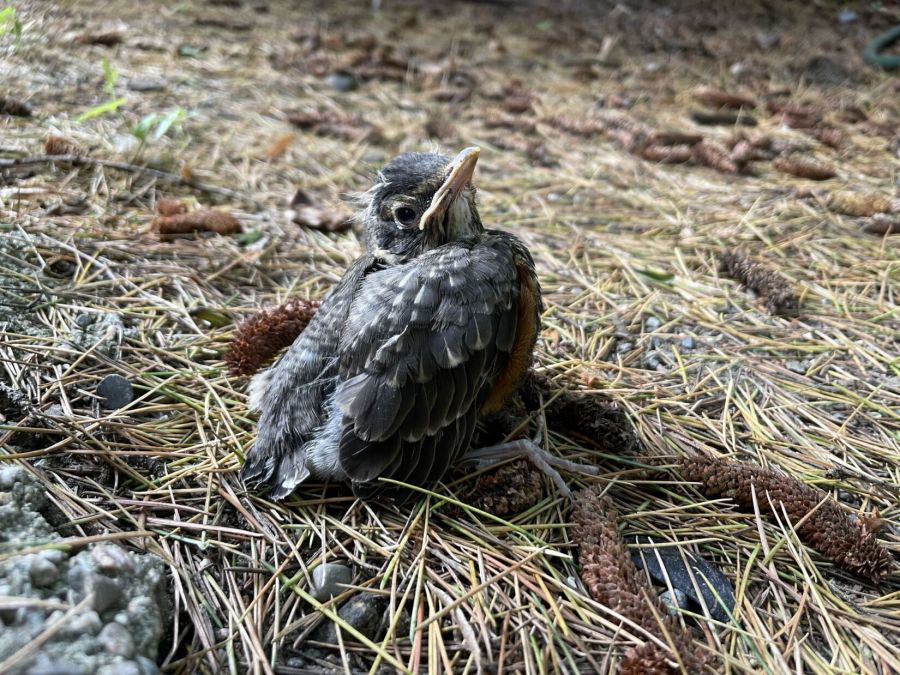
A fledgling is an older baby bird that is nearly fully feathered and has left the nest, but has not yet mastered the skill of flying. Because of this, fledglings are often clumsy and can appear to be hurt, but they likely don't need human intervention.
If you find a fledgling:
- Unless they are in an unsafe location or immediate danger from predation or traffic, leave them alone
- Keep pets away
- Never try to give food or water to a baby bird
When to be concerned
Regardless of whether the baby is a hatchling, nestling or fledgling, the areas of concern remain the same. The following are causes for concern:
- The baby bird is obviously injured (e.g., visible blood or broken bones, or the bird has been caught by a cat or dog)
- There are other dead birds in the nest or nearby
- You have not seen any parents checking in on the baby
- The babies appear lethargic instead of bright and alert
What to do if there are concerns
Baby birds are not the only baby wild animals that can often be left alone when found. Baby rabbits and deer fawns are also commonly “kidnapped” by well-meaning animal lovers.
Here are further guidelines if you’ve found a different baby animal unattended.
The BC SPCA is a non-profit organization funded primarily by public donations whose mission is protecting vulnerable animals and mobilizing communities, so animals and people thrive together.
This is supported through a wide range of services, including animal protection investigations, emergency rescue and treatment, sheltering and adoption of homeless and abused animals, humane education, advocacy, farm and wild animal welfare, community services like spay/neuter programs, and wildlife rescue and rehabilitation.